


Every day millions of people are forced to leave their homes due to war, persecution, famine, and natural disasters. Behind each of them there is a story of an interrupted life. In this article, we want to give space to the voices of those authors that, through writing, were able to tell about what it means to lose everything and start over. Writers that lived through the uprooting and with their words can help us understand the complexities of exile.

Alidad Shiri
Alidad Shiri was forced to leave Afghanistan alone, at the age of 10, after having lost a large portion of his family. His father, a political leader, was assassinated by the Taliban, and soon after his mother and little sister also died under the bombardments. He fled to Pakistan with his aunt and remaining siblings, searching for a safe place where he could continue studying.
In Pakistan, he realized that there is no future for him there either, and he decides to undertake the long and dangerous voyage to Europe, through Iran, Türkiye, and Greece. After more than four years, he finally arrived in Italy.
There he was able to rebuild his life: he studied philosophy an the University of Trento, and today he is a writer, pedagogue, and activist for children’s rights. He works to give a voice to people who, like him, lived through the experience of exile.
In his book Via Dalla Pazza Guerra, (which translates to “away from the crazy war”) Alidad Shiri recounts his escape and the trip to safety. An intense and touching testimony that reminds us of the power of being welcoming. This book has not been translated to English.
Viet Thang Nguyen
Viet Thanh Nguyen was born in Vietnam and arrived in the US in 1975, as a refugee, with his family. After spending a period of time in a refugee camp for Vietnamese refugees in Pennsylvania, his family moved to California.
An established writer of novels and essays, Nguyen won the Pulitzer Prize for Fiction in 2016 for his novel The Sympathizer. Along with his literary carrier, he is a professor at Southern California University.
In his works, he faces themes tied to his personal experiences, including: identity, escape, racism, and memory.
In the short story collection The Refugees he tells clearly and sensitively what it means to be living between two worlds, that of the birth country and that of the adopted country. Stories that help understand the complexities of the emotions and the challenges experienced by those who try to build a new life without forgetting their roots.


Dina Nayeri
Dina Nayeri left Iran with her mom and her brother as a child. Her mother had been arrested and interrogated multiple times, and threatened to be executed by the moral police for having converted to Christianity.
The family requested asylum, and after spending two years in refugee centers in Dubai and then in Rome, they obtained asylum in the United States. They moved to Oklahoma, and Nayeri continues her studies, first at Princeton University and then at Harvard. Today she lives in Scotland, where she teaches creative writing at the University of St. Andrews.
Dina Nayeri is an established writer. She has published several books, translated into more than 20 languages, and essays, on the reality of being refugees. Her passion is telling stories, and recently she has begun writing theatrical works.
In her book The Ungrateful Refugee: What Immigrants Never Tell You she tells her experience in what it means to escape, analyze the often silent rejection of the host community, and investigate the deep confusion tied to the loss of identity.
Mariatu Kamara
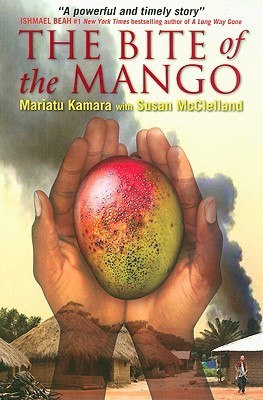
Mariatu Kamara was born in Sierra Leone, and during the war that lasted the ‘90s, she was brutally assaulted by a group of soldiers who cut her hands off. She was only twelve.
The violence, however, did not end there. After she was raped by an older man, Mariatu gave birth to a baby. In that period she lived in a refugee camp, and she did what she could to raise the child, despite the circumstances, her age, and the trauma of her hands being cut off. The child died after only about a year of life due to a respiratory illness.
It was thanks to a Canadian family who heard her story, that Mariatu gained refugee status in Canada. Today she is UNICEF Canada’s Special Representative for Children in Armed Conflict. She created a foundation to assist women and children refugees who are victims of abuse in Sierra Leone, and she told her story in her book Bite of the Mango.
Aeham Ahmad
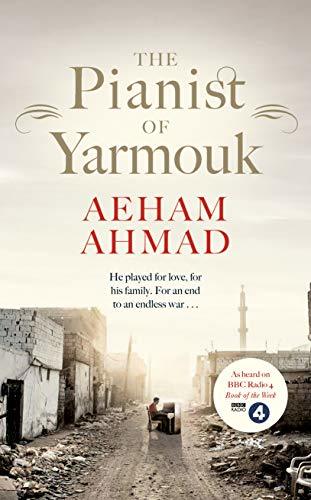
Born and raised in the Palestinian refugee camp in Yarmouk, Syria, Aeham is known for his piano performances amid the rubble during the Syrian civil war.
Having an uncommon musical talent, Aeham started playing piano at five years old, and attended the The Higher Institute of Music in Damascus. At the outbreak of the war, he transported his piano in between the destroyed homes and played to give hope and bring some relief.
The videos of his performances went viral on Youtube, but when his piano was destroyed, Aeham decided to leave Syria, and, after traveling through Lesbos and Izmir, he reached Germany, where he gained refugee status.
Aeham tells his story in the book The Pianist of Yarmouk, one of the most touching and engaging stories I have read on civil war and the attack on a refugee camp.
JJ Bola
Born in Kinshasa, in the Democratic Republic of the Congo, JJ Bola reached the UK at the age of six. His parents had requested asylum, and for a long time did not have official documents. JJ had shown great talent in basketball, but his not having a passport restricted him from participating in international basketball competitions.
JJ therefore dedicated himself to writing, particularly collections of poems, and later the publication of two novels. The first, autobiographical, is No Place to Call Home – a beautiful and delicate tale told by a child who doesn’t know what is happening in his new country. It is truly a touching work that I strongly recommend.

Kader Abdolah
Kader Abdolah was born in Arak, Iran, and attended university in Teheran. He was always interested by writing, and he began to publish his writing under the pen name he still uses today. When he realized the regime had found out that he is a political activist, he decided to leave Iran, and after three years in Türkiye, he requests political asylum in the Netherlands.
He taught himself Dutch, and began to write in Dutch, which he called “a language that makes him feel free.” He is the author of marvelous works, some autobiographical like De reis van de lege flessen and others that tell the story and culture of his country of origin, such as The House of the Mosque and The King.
Malala Yousafzai
Malala Yousafzai is a Pakistani activist for civil rights and, in particular, girls’ rights to education. Daughter of a teacher, she started attending her father’s school and advocating for women’s rights at a very young age.
She publicly denounced the Pakistani Taliban, and in 2012 she was shot in the head while returning home from school.
After going to the UK for treatment, it was not possible for Malala and her family to return to Pakistan. In 2014 she won the Nobel Peace Prize and in 2020 she got her Bachelor’s degree Philosophy, Politics and Economics at Oxford.
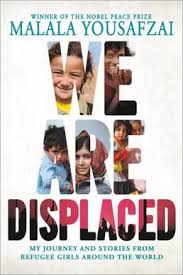
In her book We Are Displaced: True Stories of Refugee Lives she tells about her travels to refugee camps around the world, collecting the testimonies, dreams, and hopes of the young people living there.

Ibrahima Lo
Ibrahima Lo arrived in Italy in 2017 as an unaccompanied minor, having lost his parents a few years before. He was 17 and had traveled a long distance through Niger, Libya, and the Mediterranian.
He obtains a residence permit, but, being almost an adult, he was unable to continue his studies, so his dream of becoming a journalist seemed impossible: his only option was to work.
Despite this, with strong determination, he was able to balance studying and working, finding in his studies the possibility to build a new future.
Guest of Expatclic’s Human Library, in his most recent book La mia Voce (Which has not been translated to English), he finds the faces and voices of the people he lost during his long voyage towards Italy, lives ended too early, that, through his words come back to life in memory.
If you know of other refugee authors that you would like to let us know about, please don’t hesitate to write to us.
Barbara Amalberti and Claudia Landini, translated from Italian by EDV
Cover by Ricardo Gomez Angel for Unsplash